
Have you ever woken up and thought, “Why do I feel like I worked out in my sleep?” because of how sore your body feels? After all, sleep is supposed to help you rest and recover. However, sleep position and support during sleep matter more than most people realize. Your muscles can stay under stress for hours if your body isn’t well supported.
You may think muscle strains only happen during exercise or heavy lifting. But the truth is, you can wake up feeling like your muscles are strained even after a night of sleep. In this article, we’ll help you understand if you can really get muscle strain from sleeping. We’ll also explain the science behind muscle pain after sleep and how you can manage it naturally with ANF Therapy®.
Can Sleep Actually Strain Your Muscles?
First, let’s talk about what “muscle strain” really means. A muscle strain happens when muscle fibers are stretched too much or have contracted too intensely. Many times, it happens suddenly, e.g, pulling a muscle while lifting something heavy or running too fast without any warm-up exercises.
However, strain doesn’t always come from one singular moment. If a muscle is held in a stressful or awkward position for a long time, it gets tired. It stays tight. Over hours, that tension adds up.
So can this happen during sleep? Yes. Absolutely. And this is why poor sleep can stress and strain your muscles instead of resting them.
Why Sleeping Can Affect Your Muscles
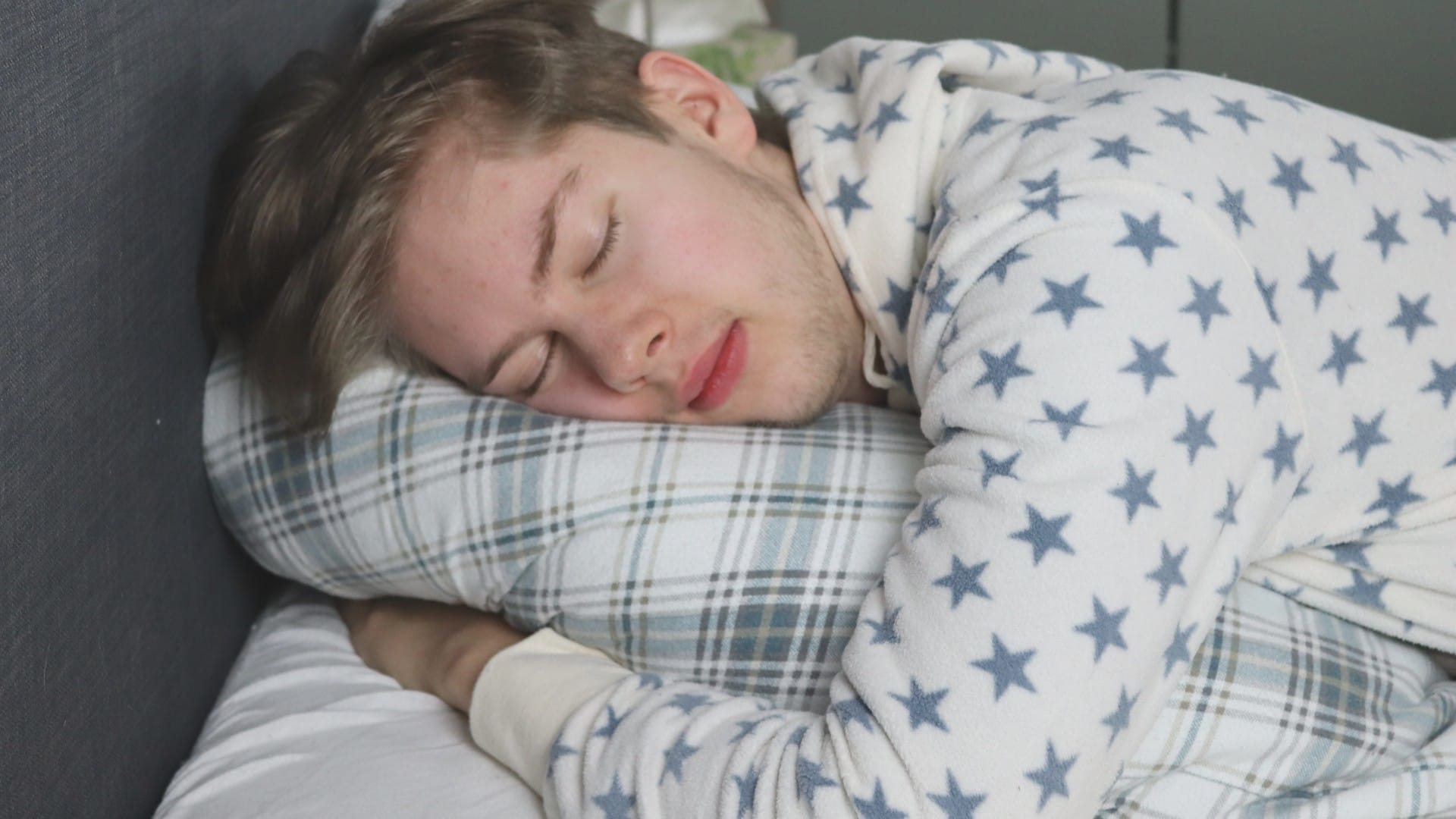
Even when you aren’t partaking in rigorous activities, your muscles are still affected by how your body is positioned. They are also affected by how well your body can relax and recover overnight.
Even though your muscles are supposed to relax during sleep, if your spine is not aligned or your neck is bent in a tense position, muscles can stay semi‑contracted or tense for hours. Over time, this pressure builds up. This can feel like soreness or strain after you wake up.
What Research Says About Sleep and Muscle Statistics
Scientific studies show that sleep and muscle health are closely connected. Here’s what the research tells us:
- About 6 in 10 adults with chronic lower back pain also report sleep difficulties. This indicates that when your muscles are tense or misaligned, achieving good-quality sleep becomes much harder.
- Adults who experience sleep disturbances are more likely to report ongoing back pain than those who sleep well. So, good sleep is absolutely necessary for muscle recovery.
- Among a study of dental students, more than 75% reported musculoskeletal pain, with the discomfort directly linked to poor sleep quality.
- In a study on adolescents, about half reported poor sleep, and this was strongly associated with pain in the neck and lower back.
- Another study observed sleep problems in children. Those with sleep difficulties had a 43% chance of developing muscle pain over a year, and around 7% experienced persistent pain that lasted beyond a single episode.
Common Morning Symptoms After Poor Sleep Posture
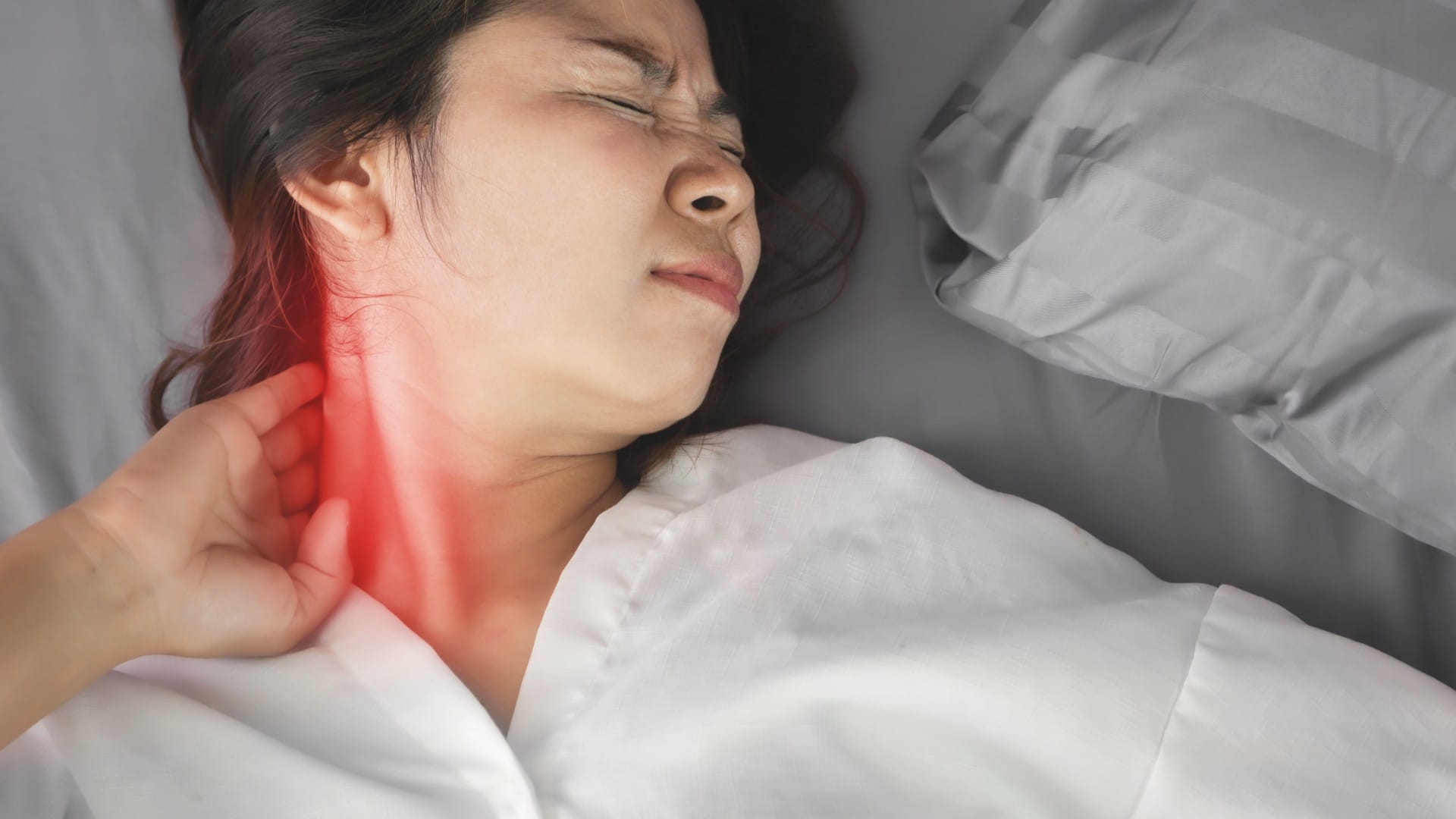
When sleep posture or support is poor, the body often sends pain signals to various parts in the morning. If you’re experiencing sleep‑related muscle strain, you might report:
- Turning your head feels hard or stiff. The sides of your neck may feel tight, and looking up or down can create a pulling feeling.
- Your lower back feels sore when you first get out of bed. It may be a deep, dull ache that slowly fades once you start moving.
- One or both shoulders feel heavy, like they were pressed on all night. It’s often worse on the side you slept on.
- The area between your shoulder blades feels sore or sensitive. Some people describe it as feeling “knotted” or tight.
- Your hip or outer thigh feels stiff or achy, especially if you slept on your side for a long time.
- Your whole body feels tight at first. After 20 to 60 minutes of moving around, your muscles will start to loosen up.
What Muscles Are Most Affected When Sleep Goes Wrong?
Three muscle areas are most sensitive to sleep-related muscle strain:
Neck Muscles and Muscle Strain During Sleep
The neck is one of the most common places people feel neck and back strain from sleeping. Your neck already has to support your head, which weighs about 10-12 pounds. In a good sleep posture, your pillow carries that weight so your neck muscles can rest.
However, when the pillow height is wrong, or your head is tilted, neck muscles stay partly active all night. This leads to:
- Neck muscle stiffness when you first wake up
- Muscle tightness when turning your head
- A sore or heavy feeling at the base of the skull
- Pain that spreads into the upper shoulders
- A “locked” feeling when trying to look left or right
- Headaches that start in the neck area

Lower Back Muscles and Muscle Strain During Sleep
Research links poor sleep posture to higher rates of muscle pain after sleeping, especially in the lower back. The spine has a natural curve that must be supported for muscles to relax. When that curve flattens or twists, your back muscles (especially your lower back muscles) stay active to protect the spine. This poor posture during sleep is even more hazardous during stomach sleeping. It can cause:
- A dull and heavy backache when getting out of bed
- Back pain that radiates deep into your inner tissues
- Back stiffness that lasts 30-60 minutes in the morning, and only eases after movement
- Difficulty bending forward right after waking
Shoulder Muscles and Muscle Strain During Sleep
Sleep position affects shoulder pain. During side sleeping, the shoulder underneath your body can be compressed for hours, especially with poor mattress support. This constant pressure on your shoulders can cause:
- Morning shoulder soreness
- A bruised or heavy feeling in your neck, shoulders, or upper chest
- Pain when lifting the arm overhead
- Muscle tightness and pain along the shoulder blade and upper arm
Does Everyone Get Muscle Strain from Sleep?
Not all people will get muscle pain from sleep. Here are a few factors that can determine if you’ll experience muscle discomfort during sleep:
- A pillow that is unsupportive (e.g, too high or too low, too soft or too hard) can misalign your head and neck.
- Mattresses that don’t support the natural curves of the spine force muscles to work harder. This is especially true for the lower back.
- Weak muscles provide less support for your spine. Less support means muscles fatigue faster overnight.
- Similarly, taut muscles around your spine limit how your body adapts to sleep positions.
- Staying in one position too long or placing pressure on a single area, like stomach sleeping or side sleeping without support, can compress various muscle groups.
- Previous injuries or chronic pain can make muscles more sensitive. Your muscles may stay tense even during rest.
- Poor sleep quality, such as frequent awakenings or short sleep duration, reduces muscle recovery. It also increases your body’s pain sensitivity.
How Does ANF Therapy® Help Manage Muscle Strain?
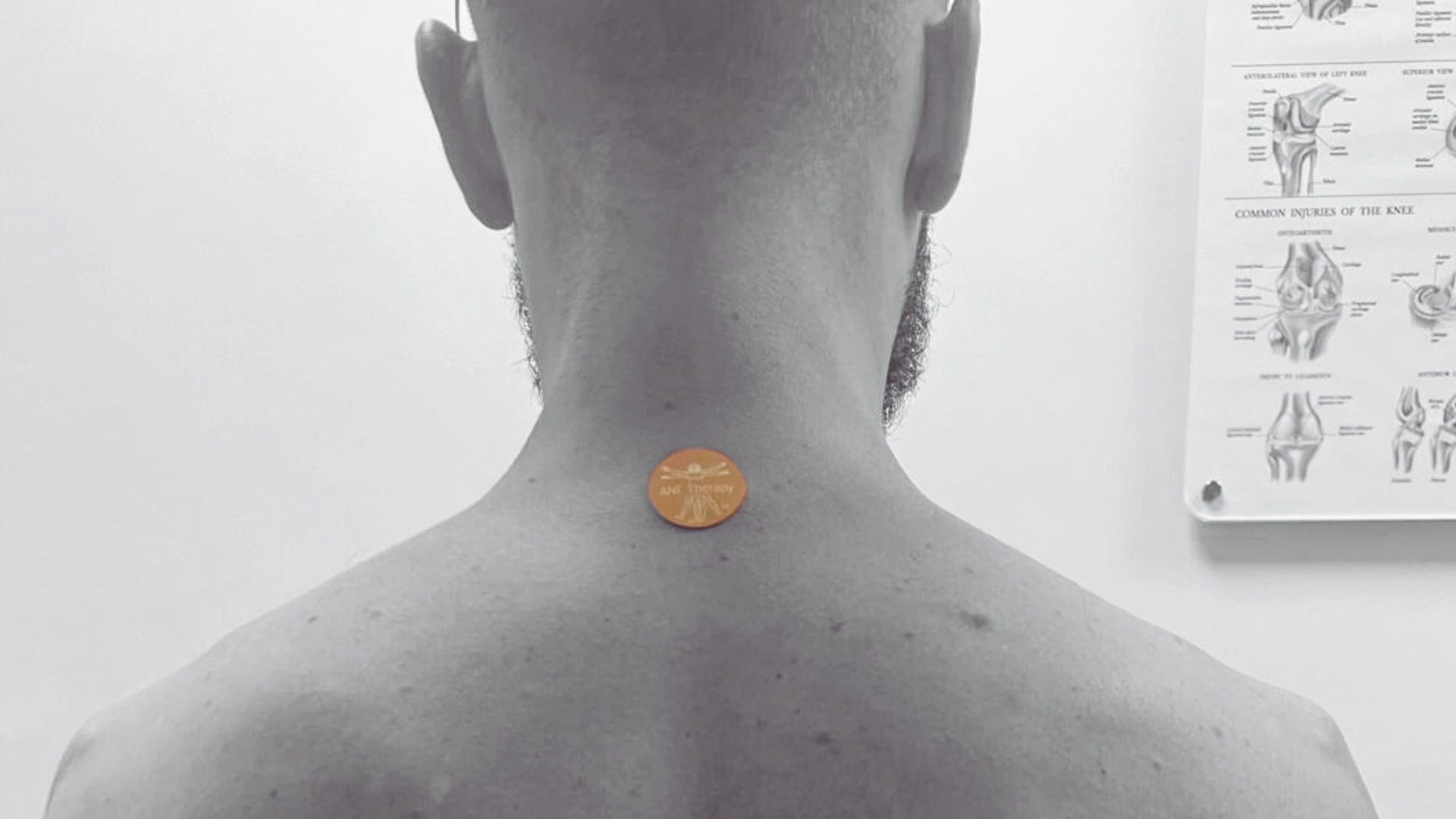
ANF Therapy® is a frequency-based, non-invasive approach that focuses on supporting communication between the nervous system and the body. Muscle strain often involves altered neuromuscular signaling, local tension, and stress-related muscle guarding. ANF Therapy® uses small ANF Devices that are applied to specific areas of the body by a qualified ANF Practitioner. These devices are designed to support the body’s natural regulatory and recovery processes at a cellular and neuromuscular level.
Many individuals include ANF Therapy® as part of their overall wellness or recovery routine, alongside conventional strategies such as rest, movement modification, hydration, stretching, and rehabilitation exercises. ANF Therapy® does not claim to diagnose or cure muscle strain but is used as a complementary modality within an integrated care approach.
Outcomes
ANF Therapy® is a drug-free modality that has been observed in real-world clinical settings. A study involving 1,054 patients across 45 countries evaluated the use of ANF Therapy® for various musculoskeletal concerns. Commonly addressed areas included the lower back, knees, neck, and shoulders. Reported pain scores decreased from an average of 7.6 to 3.1 out of 10 following ANF Therapy® use. Participants also reported reduced swelling and improved range of motion. Overall satisfaction scores were high, while reported effects such as dry mouth, headache, or fatigue were mild and short-term.
While these findings are not specific to muscle strain alone, they reflect how ANF Therapy® is commonly used in supportive care settings for musculoskeletal recovery and neuromuscular balance.
Start Your Journey With ANF Therapy®
ANF Therapy® is a frequency-based approach that supports the body’s natural processes and is used by individuals experiencing a wide range of musculoskeletal discomforts, including muscle strain. If you are dealing with ongoing muscle tension or strain, you may consider consulting an ANF Practitioner to discuss whether ANF Therapy® could be included as part of your personal wellness or recovery strategy.
You can find an ANF Therapist by visiting: https://www.anftherapy.com/find-clinic/.
For healthcare professionals interested in expanding their understanding of frequency-based approaches, more information about ANF Therapy® and the ANF Clinical Education Program is available at: www.anfacademy.com.